- +1 (845) 367-4240
- info@colonialpropertymanagement.com
- 410A New York 59, Airmont, NY 10952, USA

Most investors evaluate tenants using the same three metrics: credit score, income verification, and a background check. These are essential screening tools, but they are fundamentally backward-looking. They tell you if a tenant has paid bills in the past, but they cannot tell you how predictable that tenant will be inside your New York or Connecticut rental property.
At Colonial Property Management, we track a metric that goes beyond the standard screening report. We call it the Tenant Predictability Index.
This isn’t an industry term you can find in a textbook. It is an internal scoring model we developed to evaluate how consistent tenant behavior drives your ROI. For investors managing their properties, this metric often separates high-performing assets from cash flow drains.
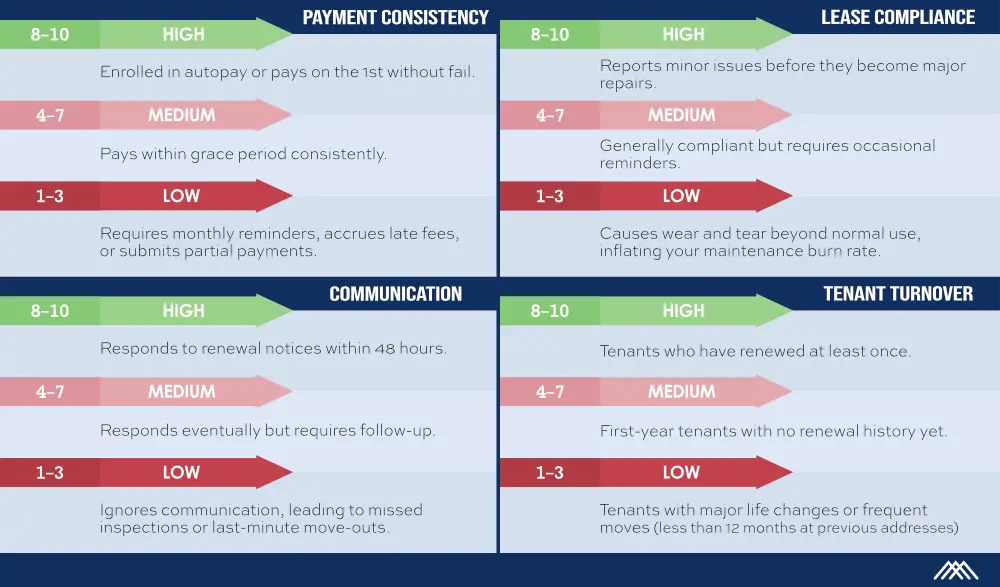
The Tenant Predictability Index is a scoring model (scale of 1-10) that measures how predictable a tenant’s behavior is across these four factors that most directly impact your net operating income:
1. Payment Consistency: Do they pay on time, or do they consistently test the grace period?
2. Communications: Do they answer maintenance requests and lease renewal notices promptly?
3. Lease Compliance: Do they adhere to rules and report issues before they become emergencies?
4. Tenant Turnover: Are they likely to renew, or are they a vacancy risk?
A multifamily property in New York with a portfolio Predictability Score of 7/10 or higher will almost always outperform a comparable property with higher rent but a low Predictability Score of 3/10.
A predictable rental income stream is the most attractive metric for lenders and investors looking to scale their portfolios.
When you have unpredictable tenants, your Net Operating Income (NOI) becomes volatile. One month rent is short, the next month brings emergency repair costs from unreported maintenance issues. Volatility makes it impossible to plan for acquisitions or capital improvements.
Data confirms that understanding tenant behavior directly impacts your returns. Research on tenant churn demonstrates that lease count, lease type, and tenant status are significant factors affecting whether a tenant renews. Property managers who track these behavioral patterns gain a competitive advantage in tenant retention.
To manage predictability, you must first measure it. Here is how we calculate this metric for properties across Rockland County and surrounding counties.
Once you’ve gathered 24 months of data, score each tenant across these four categories using the following criteria:
After scoring the data, calculate the average portfolio score per tenant:
(Payment Score × 0.35) + (Communication Score × 0.20) + (Compliance Score × 0.25) + (Turnover Score × 0.20) = Individual Tenant Score
Then average across all units to get your portfolio Predictability Score.
Once you calculate average scores across your New York or Connecticut investment properties, the next question is: What does this number actually mean for my investment?
To answer that, we need to look at your score through the lens of your specific market. For investors focused on Rockland County real estate, understanding tenant predictability is particularly valuable given the current market dynamics:
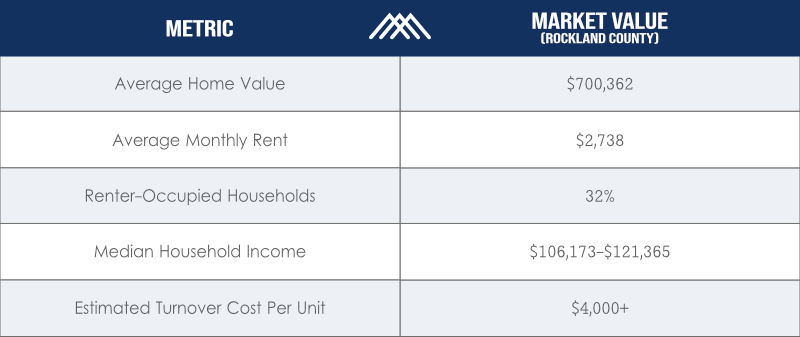
With 32% of households renting and median incomes that support stable tenancies, Rockland County offers a good investment potential for landlords, but only if you select and retain the right tenants . The difference between a 7/10 and a 3/10 Predictability Score in this market isn’t abstract. It represents real, quantifiable dollars.
Here is how to interpret your portfolio predictability score and how to fix it:
You have a mix of reliable tenants and those requiring constant reminders. Some pay late consistently (testing the grace period), others are slow to respond to renewal notices, and a few may be causing minor compliance issues.
Moving a portfolio from 5/10 to 7/10 typically increases effective gross income by 8-12% through reduced late fees, lower turnover, and fewer emergency repairs. To achieve this, the strategy starts with consistent payment reminders. We have a dedicated team that ensures no reminder is ever missed. For owners managing their own properties, implementing automated reminders can provide a similar safety net, but the dedicated personnel build relationships while securing payments.
You have a mix of reliable tenants and those requiring constant reminders. Some pay late consistently (testing the grace period), others are slow to respond to renewal notices, and a few may be causing minor compliance issues.
Moving a portfolio from 5/10 to 7/10 typically increases effective gross income by 8-12% through reduced late fees, lower turnover, and fewer emergency repairs. To achieve this, the strategy starts with consistent payment reminders. We have a dedicated team that ensures no reminder is ever missed. For owners managing their own properties, implementing automated reminders can provide a similar safety net, but the dedicated personnel build relationships while securing payments.
You are dealing with late payments, high maintenance calls, and annual turnover. Tenants may ignore communication, leading to missed inspections or last-minute move-outs. Your maintenance burn rate is likely elevated due to unreported issues becoming emergencies.
A portfolio scoring below 3/10 typically experiences 15-20% effective rent loss annually when combining vacancy, late payments, and damage. For a low scoring portfolio, the strategy starts by auditing your tenant screening process, reviewing lease enforcement, and considering professional property management to take over your entire portfolio.
Whether your portfolio scores a 4 or an 8, there are proven strategies to improve tenant predictability:
1. Require autopay enrollment for all new leases. This single step eliminates payment variability.
2. Verify rental history directly with previous landlords. Ask specific questions about payment timing, communication, and property care.
3. Look beyond credit scores. A tenant with a 650 credit score but five years of on-time rent payments at their previous address is often more predictable than a tenant with a 720 score but no rental history.
4. Set clear expectations upfront. Provide a tenant handbook that outlines communication protocols, maintenance reporting procedures, and renewal timelines.
1. Maintain consistent payment reminders for rent, inspections, and renewal notices to improve response rates.
2. For self-managing owners, automated reminders for rent, inspections, and renewal notices can improve response rates, though they lack the personalization of a dedicated follow-up.
3. Conduct semi-annual check-ins to strengthen tenant relations.
4. Address issues early. When a tenant shows early signs of unpredictability (first late payment, ignored notice), address it immediately.
A high Predictability Score doesn’t happen by accident. Building a portfolio of predictable tenants requires a systematic approach to screening, communication, and retention. This is exactly what we deliver at Colonial Property Management LLC.
Here is how our property management services directly improve your portfolio’s Predictability Score:
1. Tenant Placement & Screening: We investigate behavioral patterns that predict long-term stability, so tenants enter your property with a demonstrated history of on-time payments and responsible communication.
2. Rent Collection & Financial Reporting: Our dedicated Receivable & Collectibles department handles payment follow-up through persistent, personal outreach, ensuring no reminder is ever missed. We combine this proven manual method with clear late fee policies and online payment options, while our monthly reports let you track payment patterns in real time.
3. Local Expertise: Whether your portfolio spans the Hudson Valley, Westchester, or Fairfield County, we understand the local laws and market dynamics that affect tenant behavior, and your returns.